
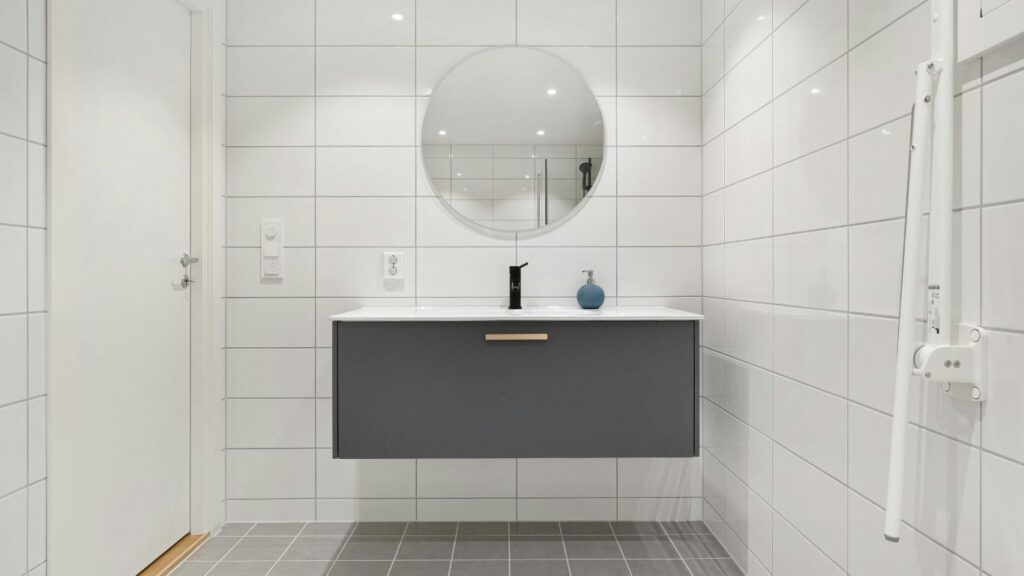
Floating bathroom vanities attach directly to the wall, leaving the floor visible beneath them. Because the wall supports the vanity, secure mounting is essential.
The correct installation method depends on the vanity’s weight, wall construction, mounting hardware, and manufacturer requirements.
1. Locate the Wall Studs
Wall studs provide the primary support for most floating vanities. Use a stud finder to locate the wooden or metal studs, then mark their positions at the desired installation height.
Whenever possible, attach the mounting hardware directly to the studs. Drywall alone is not strong enough to support a heavy vanity.
2. Install the Mounting Hardware
Floating vanities may use one of several mounting systems:
- Metal brackets: Heavy-duty brackets attach directly to the wall studs with appropriate screws or lag bolts. The vanity rests on or connects to these brackets.
- French cleats: This system uses two interlocking, angled pieces of wood or metal. One attaches to the wall, while the other attaches to the vanity. The vanity is then lifted onto the wall cleat.
- Support rails: A horizontal rail attaches to the studs and distributes the vanity’s weight across the wall. Brackets on the back of the vanity hook onto the rail.
Use the mounting system and fasteners specified by the vanity manufacturer.
3. Attach the Vanity Directly, When Appropriate
Some floating vanities can be fastened directly to the wall studs through their back panels. This method is more common with lighter models or vanities designed specifically for direct mounting.
Heavier vanities may still require brackets, cleats, or additional reinforcement to distribute their weight safely.
4. Add Blocking When Necessary
The wall studs may not align with the vanity’s mounting points. In this situation, horizontal wood blocking can be installed between the studs.
Blocking creates a solid mounting surface behind the wall. It is easiest to add during new construction or while the wall is open during a renovation.
5. Use Wall Anchors With Caution
Heavy-duty wall anchors may provide secondary support when every mounting point cannot align with a stud. However, anchors should not replace secure attachment to studs or properly installed blocking unless the manufacturer specifically allows it.
Always confirm that the anchors are compatible with the wall material and rated for the required load.
Important Installation Considerations
Before installing a floating bathroom vanity, consider the following:
- Total weight: Account for the cabinet, countertop, sink, plumbing fixtures, and items stored inside the vanity.
- Wall construction: Drywall, plaster, masonry, and concrete require different fasteners and installation methods.
- Manufacturer instructions: Follow the installation guide supplied with the vanity, including all hardware and weight requirements.
- Leveling: A level vanity is essential for proper drainage and the smooth operation of doors and drawers.
- Plumbing: Plan the locations of the water supply and drain lines before mounting the cabinet.
But Should You Hire a Professional?
Professional installation is recommended for heavy vanities, walls that require reinforcement, or projects involving plumbing modifications. A qualified contractor or plumber can confirm that the wall is properly prepared and that the vanity is mounted safely.
Always follow the manufacturer’s instructions and applicable building and plumbing codes.